
Organizing Like a Minimalist: A Practical Guide for Kitchener-Waterloo Homes
There's a reason minimalism has captured so much attention over the past decade. In a world that constantly pushes us to buy more, own more, and upgrade more, the idea of intentionally choosing less feels almost radical. And for many people, it genuinely changes how their home — and their life — feels.
But minimalism doesn't have to mean living with bare walls and three pieces of furniture. At its best, it's simply about being intentional: surrounding yourself with things that earn their place, and finding smart solutions for everything else.
For residents of Kitchener-Waterloo, where homes range from downtown condos and student rentals to family houses in the suburbs, minimalist organizing principles can make a meaningful difference — and self-storage can play a surprisingly useful supporting role.
Less Is More: The Art of Intentional Ownership
The foundation of minimalism isn't getting rid of things — it's getting honest about them. Most of us have a complicated relationship with our possessions. We keep things out of guilt (it was a gift), out of optimism (I'll use it someday), or out of inertia (it's just always been there).
Intentional ownership asks a different question: does this thing belong in my daily life right now?
Note the word "now." A set of cross-country skis isn't something you use every day — but it belongs in your life every winter. A box of your children's artwork isn't something you display constantly — but it has genuine sentimental value you're not ready to part with. Minimalism at its most practical acknowledges that not everything needs to live in your immediate space to be worth keeping.
This is where the idea of tiered storage becomes useful. Think of your home in three layers:
Active space — things you use regularly, that live within easy reach
Accessible storage — things you use seasonally or occasionally, stored in an organized way at home
Offsite storage — things that matter but don't need to be in your living space, kept in a storage unit
This framework lets you keep a genuinely clear, calm home without making painful decisions about things that still hold value.
Room by Room: Minimalist Storage Strategies
Applying minimalist thinking room by room makes the process manageable. Here's how to approach each space.
Kitchen
The kitchen is one of the easiest places to over-accumulate. Duplicate gadgets, appliances used twice a year, novelty items received as gifts — kitchens attract clutter. A minimalist kitchen keeps countertops clear and only houses the tools used regularly. Seasonal or specialty items (a large turkey roaster, a bread maker, a pasta machine) are candidates for accessible home storage or a small storage unit if space is tight.
Living Room
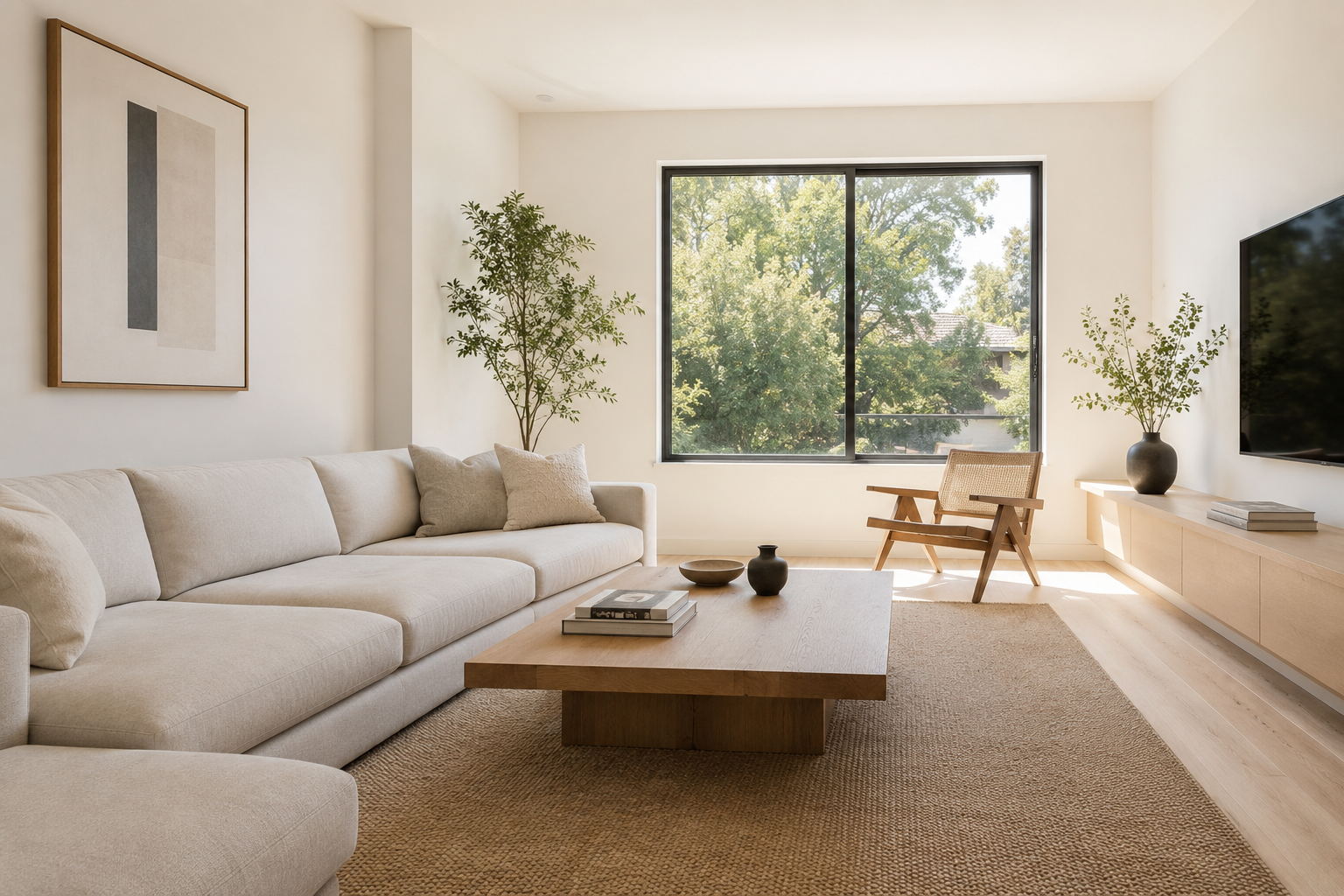
The living room sets the tone for your whole home. Minimalist living rooms prioritize open surfaces, intentional décor, and furniture that serves a clear purpose. Books you've read and won't return to, decorative items that no longer feel like "you," and hobby gear that belongs to a past version of yourself are all worth reconsidering.
Bedrooms and Closets
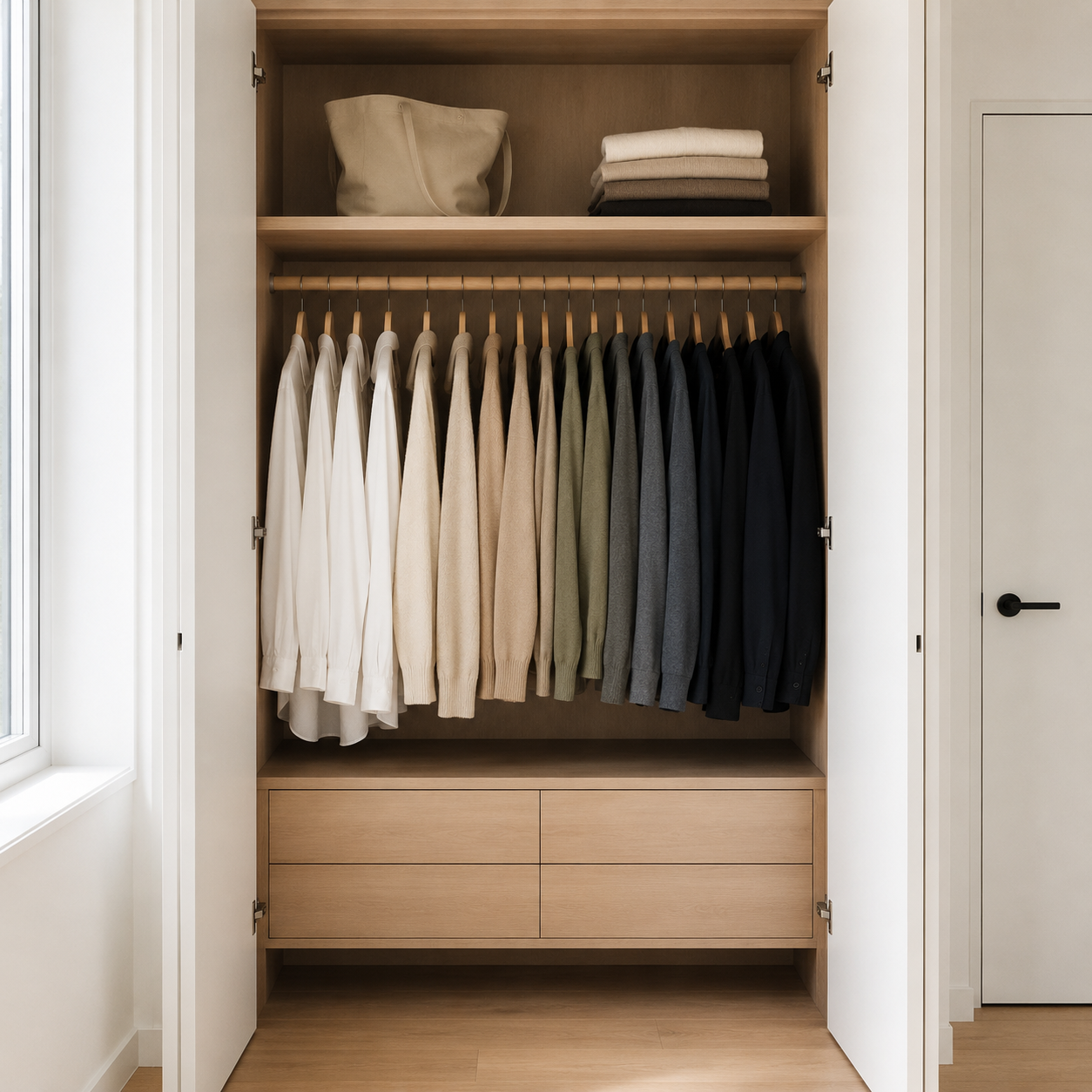
Clothing is where most people carry the most excess. A useful exercise: pull everything out, and only return what you've worn in the last year and genuinely like wearing. Off-season clothing — heavy winter coats in July, summer linens in January — can be stored in vacuum-seal bags or in a storage unit, freeing up closet space for what you're actually wearing right now.
Garage
The garage is the graveyard of good intentions. Sporting equipment for sports you no longer play, tools for projects you'll get to someday, furniture waiting for a home that never quite materializes. A minimalist garage is one where everything has a clear purpose and a proper place. A storage unit can serve as a legitimate overflow valve — particularly for seasonal gear like hockey equipment, bicycles, or gardening supplies that genuinely belong in your life, just not underfoot year-round.
Joy Factor: Keeping Only What Sparks Happiness
Marie Kondo's concept of keeping only what "sparks joy" became a cultural phenomenon for a reason — it reframes the decision from "should I get rid of this?" to "does this genuinely belong in my life?" That's a more honest question, and it leads to better decisions.
But it's worth extending the concept. Some things don't spark joy so much as spark meaning, spark memory, or spark usefulness. Your grandmother's china might not spark joy in the conventional sense — but it carries a family history that matters to you. Your camping gear might not make your heart sing, but it enables weekends that do.
A practical refinement: ask not just whether something sparks joy, but whether it deserves a place in your active, daily space. If the answer is no — but you're not ready to let it go — that's exactly what thoughtful storage is for. Box it carefully, label it well, and store it with intention. Revisit it in six months or a year. Sometimes distance helps clarify whether something truly belongs in your life. Sometimes you'll find you didn't miss it at all.
Practical Minimalism: Balancing Need vs. Want
Pure minimalism can be impractical, and chasing an aesthetic rather than a lifestyle is a trap. The goal isn't a home that looks like a Scandinavian design magazine — it's a home that works well for the people living in it.
Practical minimalism means being honest about the difference between what you need, what you genuinely want, and what you're keeping out of habit or guilt. It also means building systems that are sustainable — ones you can actually maintain, not ones that require daily effort to preserve.
A few principles that help:
One in, one out. When something new comes into the house, something old leaves. This keeps accumulation in check without requiring periodic purges.
Seasonal rotation. Rather than trying to fit every season's worth of clothing, gear, and décor into your living space simultaneously, rotate deliberately. Summer gear goes into storage when fall arrives; winter gear comes out. Your home reflects the season you're actually in.
The maybe box. Instead of agonizing over whether to keep something, put it in a box, seal it, and date it. If you haven't opened it in three to six months, you have your answer.
Use your storage unit as a decompression chamber, not a dumping ground. The best storage unit users are intentional about what goes in and have a system for what comes out. Labelled boxes, a rough inventory list, and a clear sense of what each item is waiting for — a family member to claim it, a decision to be made, a season to arrive — makes storage feel purposeful rather than avoidant.

Bringing It Together in KW
Kitchener-Waterloo is a practical, community-minded region — and that spirit suits minimalism well. Whether you're a student in a Waterloo apartment, a young family in a Kitchener semi-detached, or an empty-nester downsizing in the suburbs, the principles are the same: keep what earns its place, store what has seasonal or sentimental value, and let go of the rest.
KW Safe Storage is right here in Waterloo to support the storage side of that equation. With flexible month-to-month rentals and a range of unit sizes, we can hold the things that matter while you create the clear, intentional home you're after. Give us a call — we'd love to help.