
The True Cost of Clutter: What Holding On to Stuff is Really Costing You
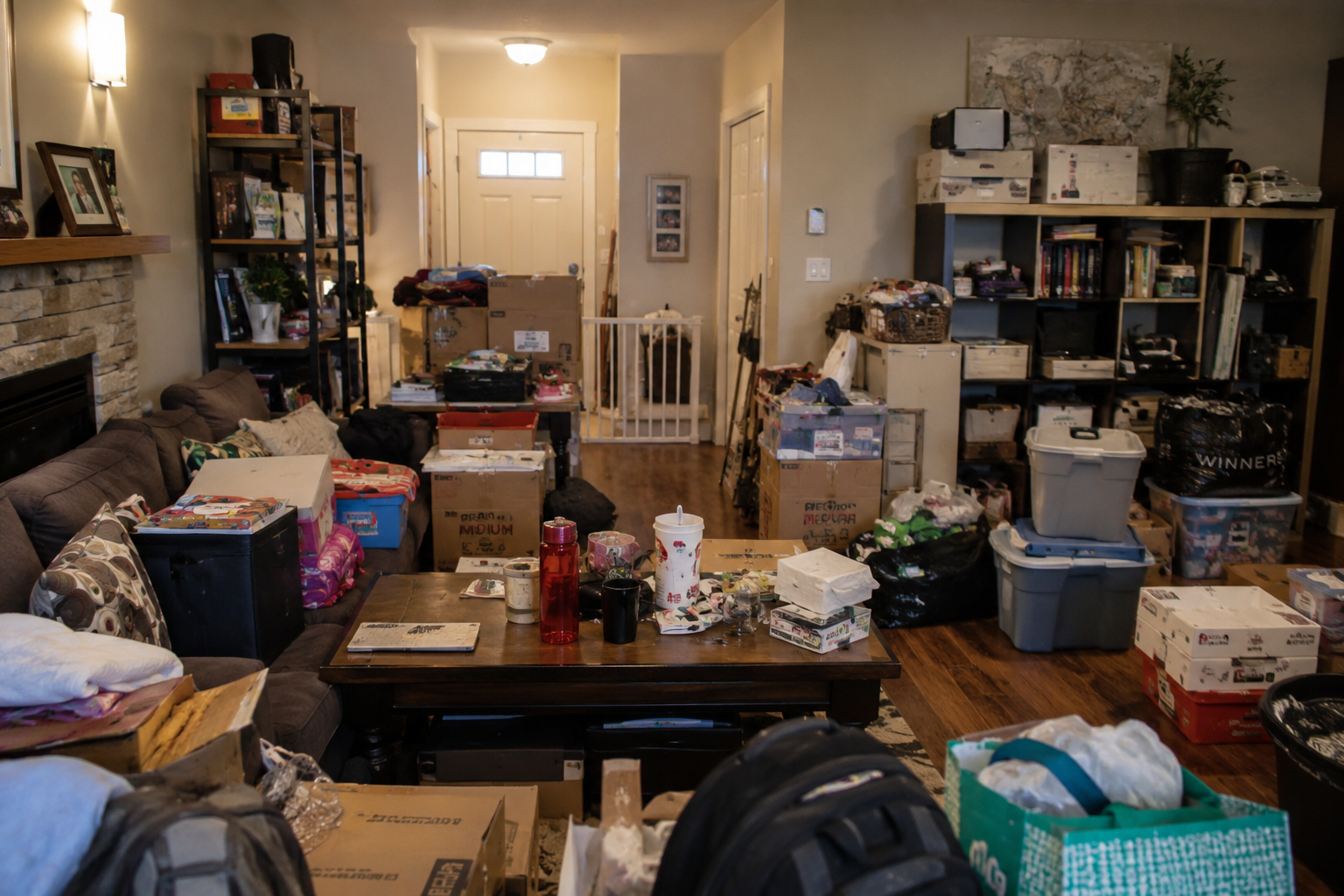
We tend to think of clutter as a space problem. Too much stuff, not enough room. But if you dig a little deeper, clutter turns out to be a financial problem, a time problem, and a mental health problem all rolled into one. The cost of holding on to things you don't need is surprisingly high — and much of it flies under the radar.
The Financial Cost
Consider how often clutter leads to duplicate purchases. You can't find your good scissors, so you buy another pair. The drill bit you need is buried somewhere in the garage, so you pick one up at the hardware store. The book you wanted to re-read is in a box in the basement — easier to just download it again.
These small purchases add up faster than you'd think. Studies on household spending suggest that disorganization costs the average family hundreds of dollars per year in duplicate items and lost purchases. That doesn't include the less tangible costs — a home that's harder to clean means more time spent on maintenance, or money spent on cleaning services.
There's also the opportunity cost of space. In a home where every room is packed, you may be running a home office from the kitchen table, passing on hobbies because there's no room, or feeling unable to comfortably host guests. The square footage you're paying for isn't being used the way you'd actually like.
The Time Cost
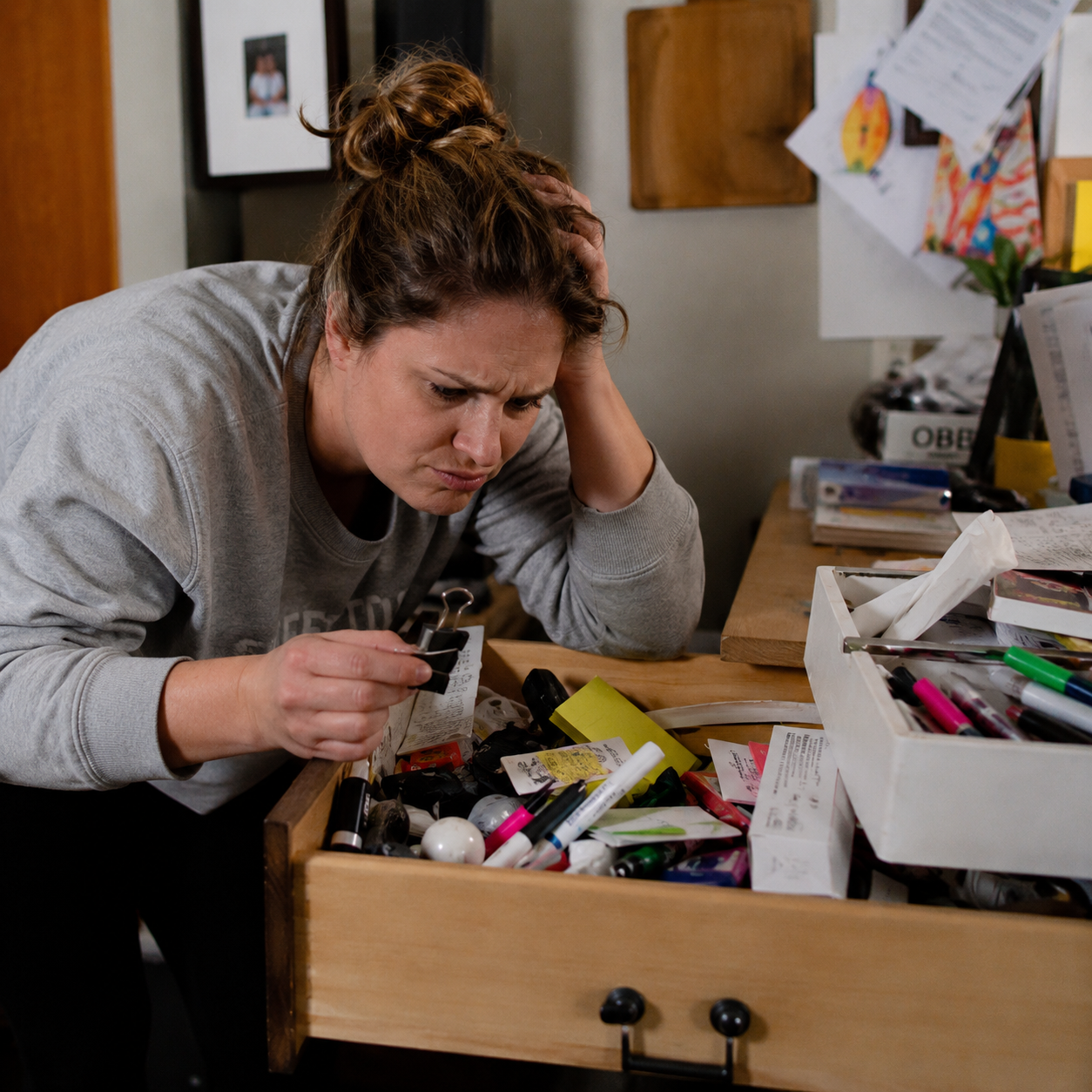
The average person spends a significant amount of time each year searching for lost items. Keys, glasses, important documents, tools — in a cluttered home, finding anything takes longer. Multiply a few minutes of searching per day across a year, and you're looking at hours of lost time.
Cleaning also takes longer when there's more stuff. Dusting, vacuuming, and tidying around dozens of items takes considerably more time than maintaining a streamlined space.
The Mental and Emotional Cost
Research in environmental psychology has shown a clear link between cluttered spaces and elevated cortisol (the stress hormone). A disordered environment signals to the brain that there's unfinished business — work that needs to be done. That low-level sense of being behind, of things being out of control, runs quietly in the background and drains mental energy over time.
Clutter can also contribute to decision fatigue. When you're surrounded by too many options and too much visual noise, making even simple choices becomes harder. A clear space makes for a clearer mind.
The Smart Middle Ground
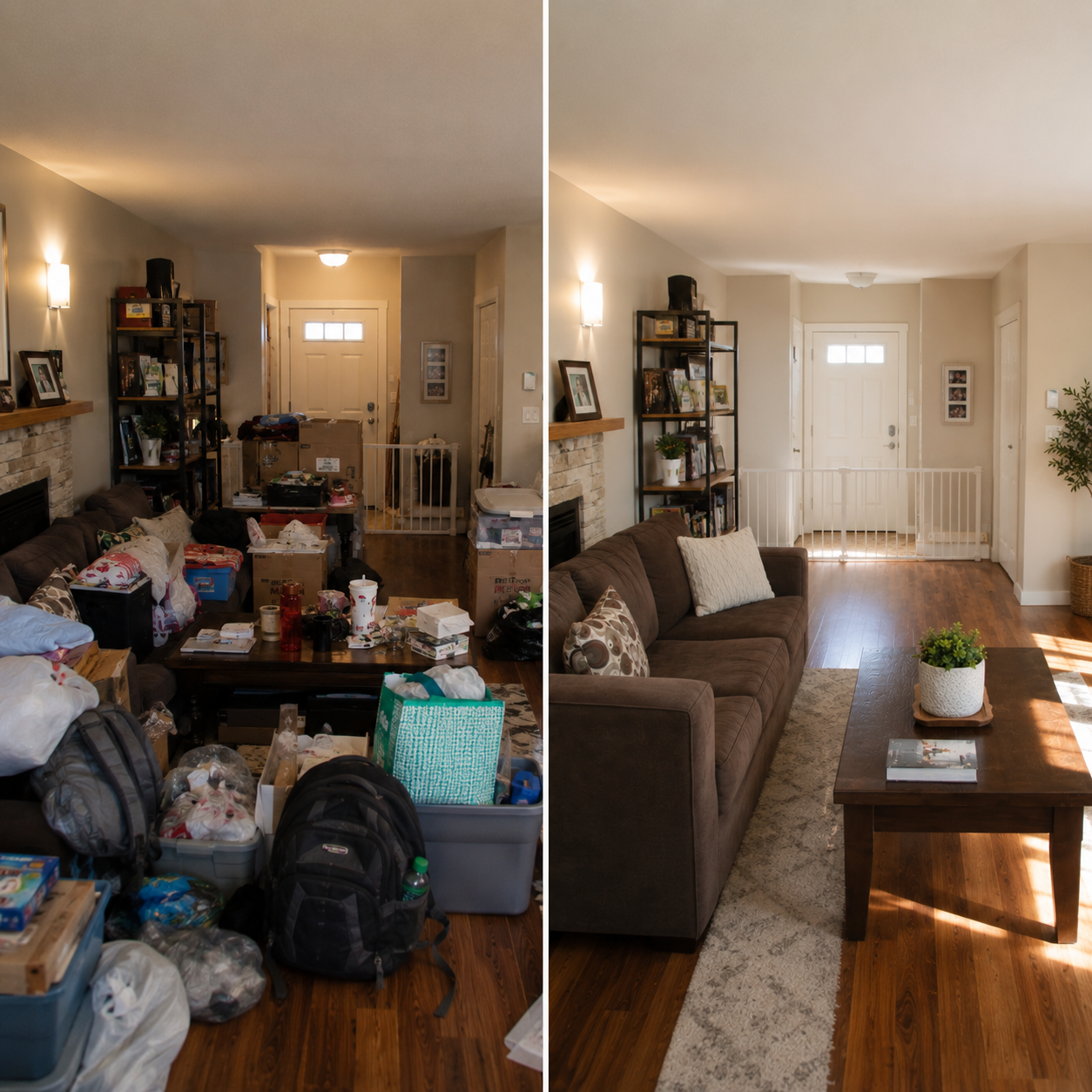
The answer isn't necessarily to throw everything out — especially for items that have genuine sentimental or seasonal value. The answer is intentional storage. Moving seldom-used items out of your daily living space (into a well-organized storage unit, for example) gives you the benefits of a clear home without the guilt or loss of getting rid of things permanently.
Think of a storage unit not as a place to dump things you can't deal with, but as an extension of your home — a dedicated space for seasonal items, keepsakes, hobby gear, and overflow. Used strategically, it reduces clutter at home without requiring you to part with things that still matter.
Ready to Reclaim Your Space?
KW Safe Storage in Waterloo offers affordable, flexible storage solutions for every situation. Whether you're looking to clear out a room, store seasonal gear, or simply give your home some breathing room, we're here to help. Give us a call and let's find the right solution for you.