
Top Storage Mistakes to Avoid (and Smart Storage Tips That Actually Work)
When it comes to storage, most people think it’s simple: pack your items, move them into a unit, and forget about them.
But across Kitchener-Waterloo, we see the same issues come up again and again — not because people are careless, but because no one ever teaches you how to store things properly.
The result? Damaged items, wasted space, and unnecessary frustration.
If you want your storage experience to be smooth, secure, and stress-free, here are the most common storage mistakes to avoid — along with practical storage tips and tricks that actually make a difference.
1. Not Labeling Boxes Clearly
This is easily the most common mistake — and the one people regret the fastest.
Many Waterloo Region residents pack quickly during a move or seasonal transition, assuming they’ll “remember what’s inside.” A few months later, everything looks the same.

What happens:
You open multiple boxes just to find one item
Time gets wasted digging through storage
Items get misplaced or forgotten entirely
Simple fix:
• Label boxes on at least two sides + the top
• Use large, readable text (not tiny handwriting)
• Be specific: “Winter Coats – Front Closet” is better than “Clothes”
Pro tip: If you're looking for more practical organization strategies, check out our guide:
👉 Smart Packing Tips for Your Storage Unit for additional storage tips and tricks.
2. Choosing the Wrong Storage Unit Size

Another common mistake? Renting a unit that’s either too small or too large.
Too small:
Overpacked units lead to damaged items
No walkway = no access to anything
Too large:
You pay for space you don’t use
Storage tip:
Visualize your layout before moving in. Leave a small aisle so you can access items without unpacking everything.
If you’re unsure, check out this article on how to size your unit:
👉 Choosing the Right Storage Size
This ensures you choose a unit that actually fits your needs.
3. Skipping Proper Packing Materials
This is where a lot of long-term damage happens.
We’ve seen local customers store items in garbage bags, reused boxes, or loosely packed bins — especially during quick seasonal swaps.
What goes wrong:
Moisture buildup
Crushed items
Fabric and paper deterioration
Storage tips and tricks:
Use sturdy, uniform boxes that stack well
Avoid plastic bags for long-term storage
Wrap fragile items properly
Keep items clean and dry before storing
A little extra effort upfront protects your belongings long-term.
4. Forgetting About Climate Sensitivity
Ontario weather isn’t subtle — especially in Kitchener-Waterloo.
Between humid summers and freezing winters, certain items are more vulnerable than people realize.
Commonly affected items:
Electronics
Wooden furniture
Clothing and fabrics
Photos and documents
Mistake:
Assuming all storage conditions are the same.
Smart move:
If you’re storing sensitive items, consider storing your items in a fully indoor storage facility like KW Safe Storage, as opposed to one of the many outdoor storage facilities where your items may freeze!
5. Poor Organization Inside the Unit
Many people treat their storage unit like a “drop zone” — placing items wherever they fit. At first, it works. But over time, it becomes a frustrating maze.
What we see locally all the time:
Boxes stacked randomly
Frequently used items buried in the back
No clear system
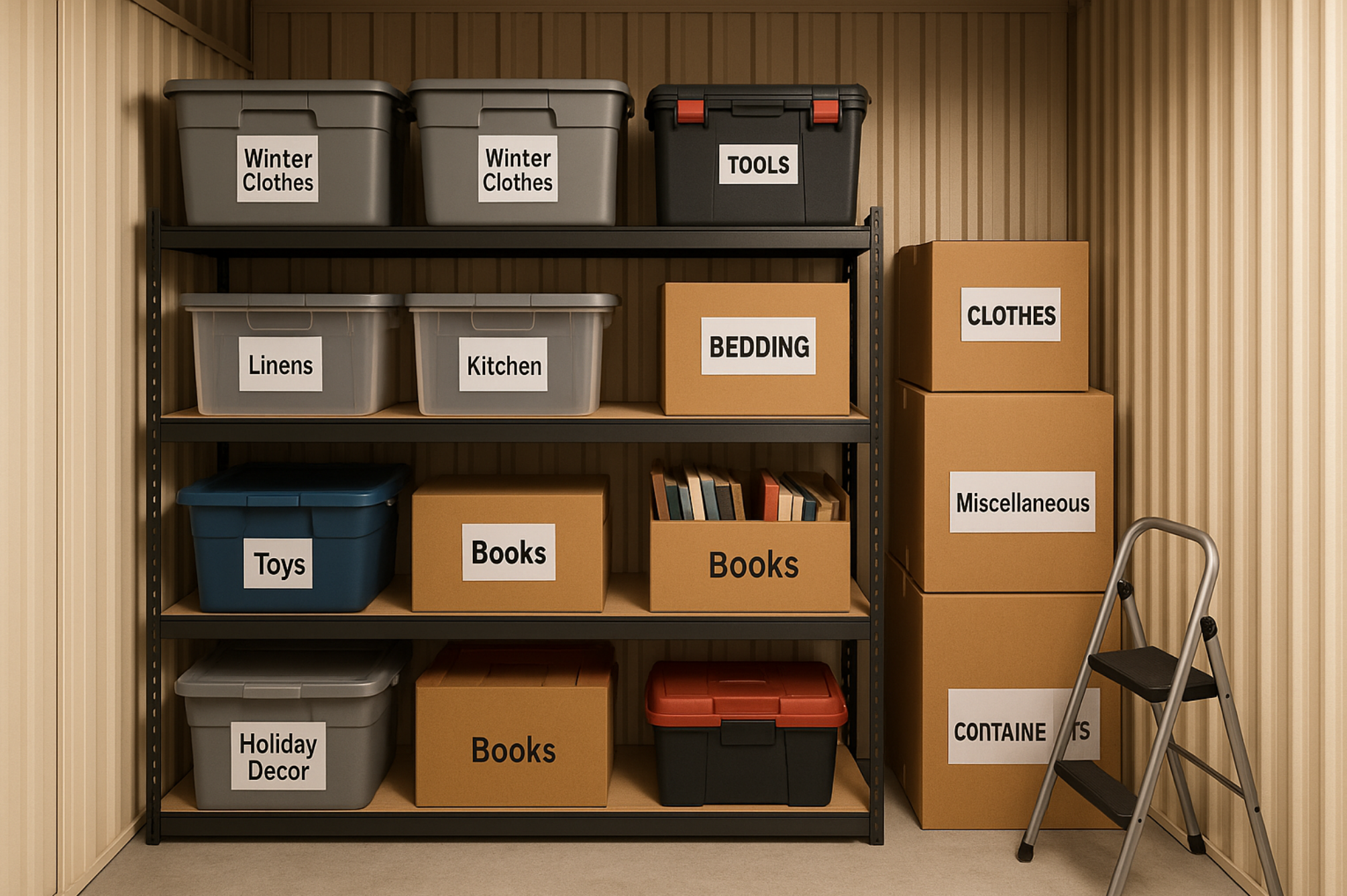
Storage tip that changes everything:
Think of your unit like a small room — not a pile.
Keep frequently used items near the front
Stack heavier boxes on the bottom
Group similar items together
Leave a narrow walkway
Planning your layout ahead of time can make a huge difference — especially when paired with the right unit size.
6. Storing Items You Don’t Actually Need
This one’s less obvious — but just as important.
Storage should create space in your life, not become a holding place for things you’ll never use again.
Common pattern:
People store items “just in case”… and never revisit them.
Better approach:
Before storing, ask:
Would I buy this again today?
Do I realistically need this in the next year?
If not, consider donating or selling.
Use storage intentionally — not emotionally.
7. Not Thinking About Future Access
A big mistake many make after the fact: They packed everything perfectly… but didn’t think about retrieval.

Result:
Every visit to the unit turns into a full unpack.
Simple fix:
Store seasonal items together
Keep important or frequently accessed items near the front
Use clear bins when possible
Storage should make life easier — not more complicated.
Make Storage Work For You, Not Against You
The difference between a stressful storage experience and a seamless one comes down to a few simple habits:
Label clearly
Pack properly
Organize intentionally
Choose the right space
If you’re ready to simplify your storage experience, you can always reach out to a local expert:
👉 Contact Us
Or learn more about your options through our affiliate booking site at U-haul.com:
👉 Online Bookings - KW Safe Storage